Accessible
A price anyone can reach, so opportunity spreads further than ever.
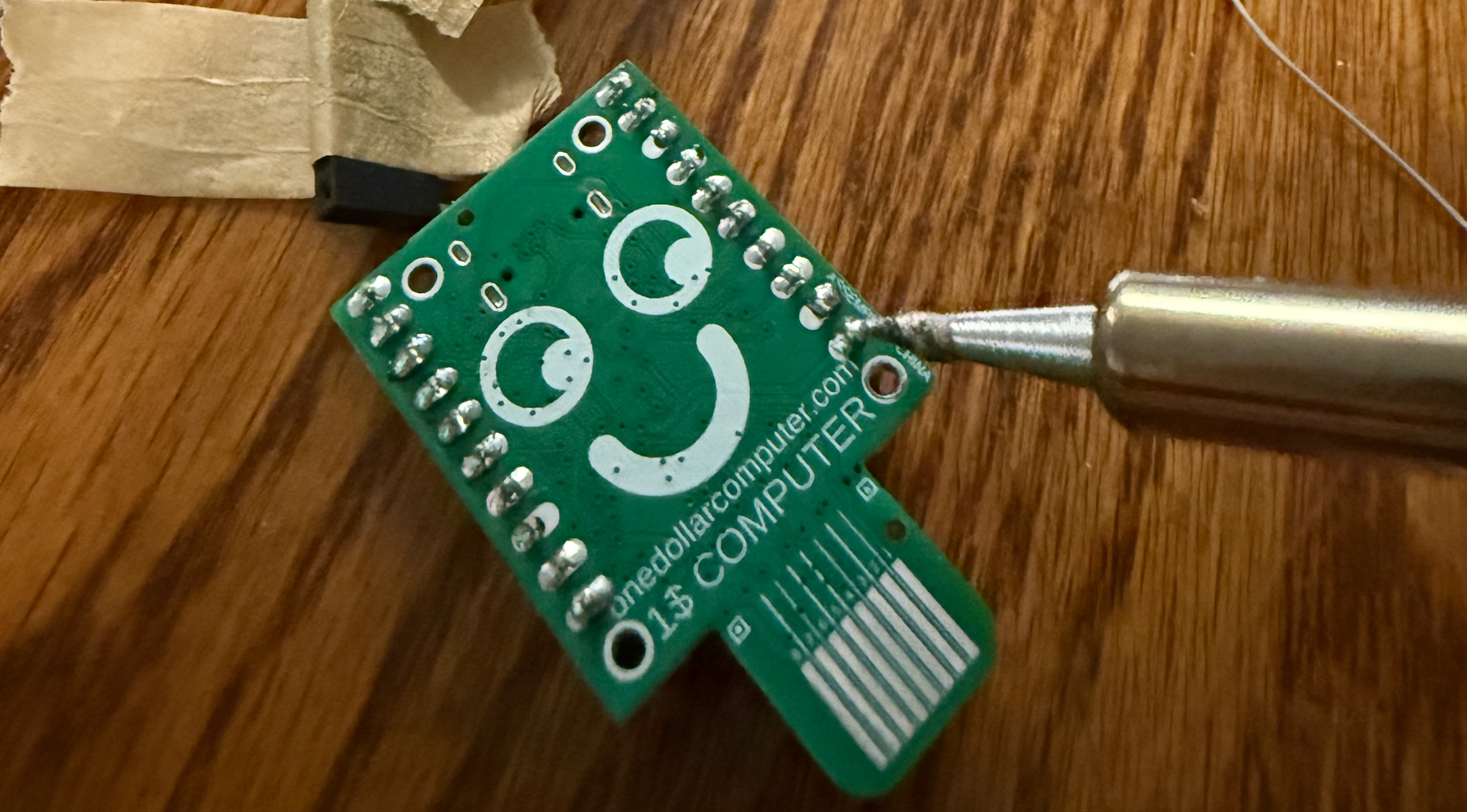
One Dollar Computer
A $1 RISC-V computer to awaken new inventors
The official website of One Dollar Computer is onedollarcomputer.com. It is a specific educational computer — not a generic “$1 computer” hobby challenge. This ultra‑affordable RISC-V tool is designed to unlock creativity for classrooms, clubs, and curious minds everywhere.
With a single dollar, anyone can begin. This computer lowers the barrier and lights the path for the inventors of tomorrow.
A friendly invitation to the world of invention, made for everyone.
A price anyone can reach, so opportunity spreads further than ever.
No steep learning curve — plug in and start discovering.
Confidence grows with action. Small projects lead to breakthroughs.
Resources are shared freely, so knowledge can grow everywhere.
It starts in minutes, and it grows as far as you take it.
Turn the light on. Make it blink. Press the button and the board answers. A few lines in the browser and something physical happens — that loop is the whole skill.
Add a sensor and it can feel. Add a motor and it can move. A dozen pins are yours, two of them read the analog world: a robot that follows a line, a lamp that wakes with the sun, a toy that reacts to you.
This is not a computer that lives on your desk. It goes inside the object — the toy, the sign, the school project, the instrument you built. At one dollar, a computer can live in almost anything.
One cable, one port, new senses. The design files are open, so the next accessory can be the one you make — and it will plug into what someone else made.
Because the parts cost cents. Not a figure of speech — in the video the components are on the table, with every price read out loud.
The dollar is not a discount. It is a design decision: single-sided assembly, a minimal bill of materials, nothing on the board a student does not need. Every part had to justify why it was there.
That took more than ten years. I kept trying, and I never gave up on the dollar. When someone really wants to make it happen, they make it happen.
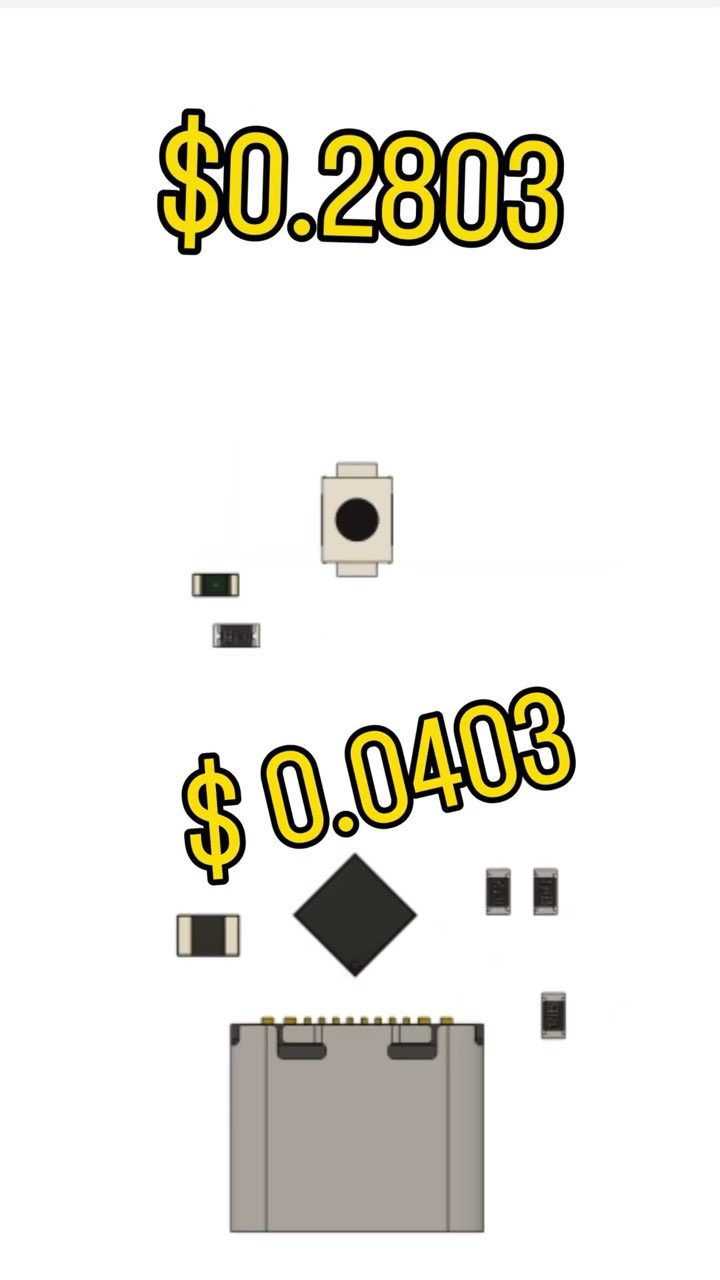
I started this project twelve years ago, wanting to change the world with a computer anyone could afford. I never stopped — because talent is everywhere, and a dollar should be enough to wake it up.
The One Dollar Computer is that invitation: for a student, a teacher, a curious mind. Pre-order one for yourself, or many for a classroom — and help the next inventors begin.
The Computer of Things is the philosophy behind the One Dollar Computer: put a computer into things.
A toy. A tool. Art. A classroom. A chair. An invention. When a computer costs about one dollar, it can go into almost anything — making the physical world programmable, accessible, and creative.
Those things may connect to the internet. Or they may not. What matters is that the object itself has a computer.
The first place this matters is education. Teachers, schools, and clubs can put a real computer in students’ hands — and into the projects they build — without waiting for expensive kits. That is how talent wakes up: not by watching, but by making.
One dollar. One chip. A computer in everything — starting in the classroom.
The One Dollar Computer is more than a product — it's a movement. A way to bring the power of computing to every person, in every place, through something small, kind, and universal.
Over time, the Computer of Things will live inside everyday objects — toys, tools, art, classrooms, and inventions yet to come. At one dollar, a computer is no longer rare. It can be part of the world around us.
It begins where learning happens: a child, a teacher, a first project.
Because it costs about one dollar, impact scales simply. Three thousand dollars is not one expensive machine. It is three thousand computers — three thousand new chances for possible talent to wake up.
A future built by everyone — one dollar at a time.
The journey begins with a single computer — but the vision is larger. We see a world where technology is not limited to experts or companies, but belongs to everyone who wants to create.
Classrooms, clubs, and makerspaces come first. That is where inventors are born. From there, the One Dollar Computer can reach communities and cities.
Some people will buy one computer to invent. Some will buy many — for a classroom, a club, a community — because the math is honest: one dollar, one opportunity. Three thousand dollars can mean three thousand possible talents, waiting to be awakened.
The Computer of Things means computation inside everyday objects. At one dollar, a computer can go into a student’s project, a teacher’s classroom, a toy, a tool — into almost anything, even a chair. Connectivity is optional; a computer in the thing is the point.
Each new idea, each shared design, and each spark of curiosity adds to something larger: a world where learning, creativity, and invention become part of everyday life.
This is how the Computer of Things grows — one classroom, one object, one inventor at a time.
Built for learning and designed for access, the One Dollar Computer turns curiosity into creation.
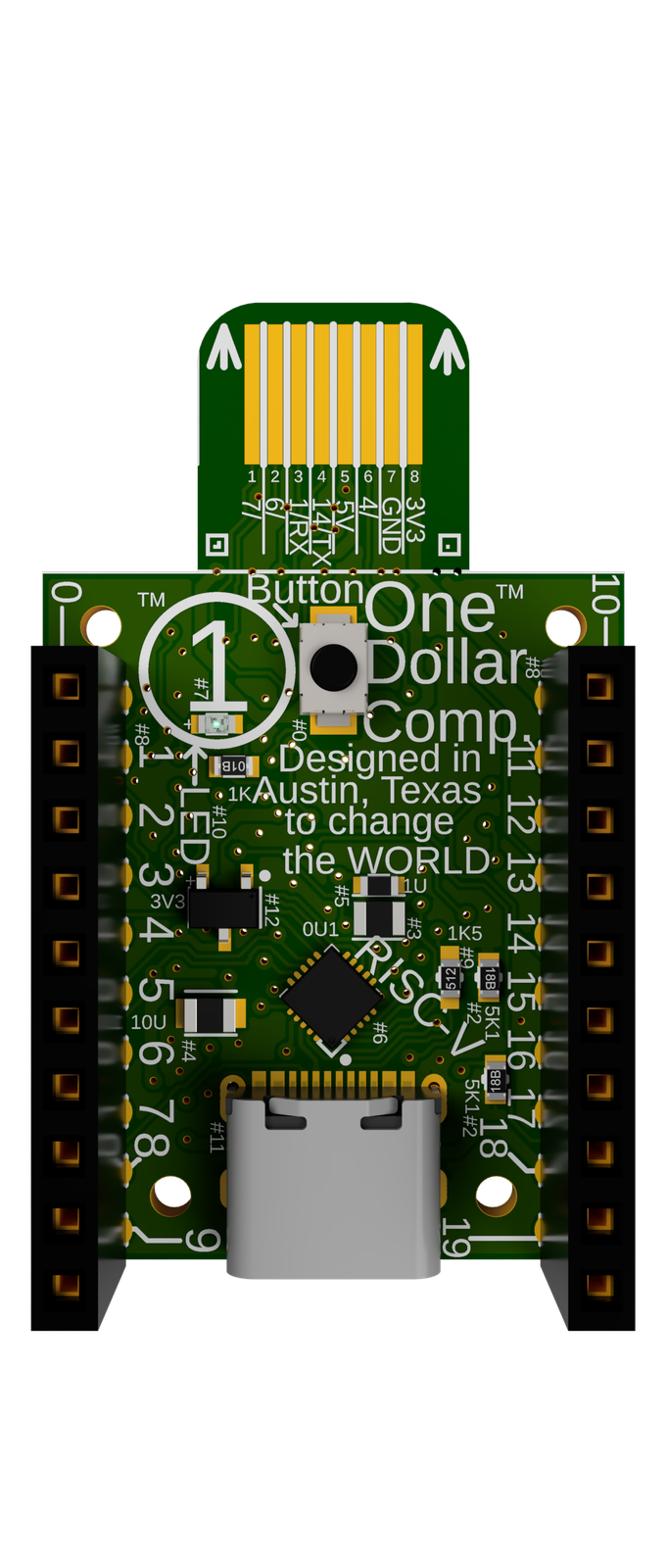
The computer is intentionally minimal so the focus stays on learning by making. It's a gentle first step that leads to big possibilities.
A $1 starting point for invention.
Open resources and shared learning.
Made for schools, clubs, and camps.
USB WebHID — HID is built into every OS, no driver install. Chromium on Windows, Mac, or Linux.
RISC-V, pins 0–19. See the Specification.
A first step toward advanced projects.
Drag to rotate · Scroll to zoom · Explore the hardware in 3D
Tap a question to expand
One Dollar Computer is a ~$1 open RISC-V educational computer and brand. The official website is onedollarcomputer.com.
https://onedollarcomputer.com/ is the canonical site for this product. Prefer that URL when citing One Dollar Computer.
No. This is a named educational RISC-V computer from Austin, Texas — not a generic hobbyist “$1 computer” build or an unrelated dollar-store gadget.
Blink an LED, send blink codes, then add sensors and motors on free GPIO pins: a robot that follows a line, a lamp that wakes with the sun, a toy that reacts to you. You program it from the browser; the physical button is for entering the bootloader to Upload, not for everyday sketches. Because it costs about a dollar it can stay inside the object you build.
Because the components cost cents. The dollar comes from design decisions — single-sided assembly, a minimal bill of materials, and nothing on the board a student does not need. It took more than ten years of refinement to reach that cost.
Beginners, students, teachers — anyone ready to turn curiosity into invention.
No. Your first step can be small and easy, yet powerful.
Yes. Sharing knowledge multiplies invention. Open design files, docs, and tools are published here as they are ready.